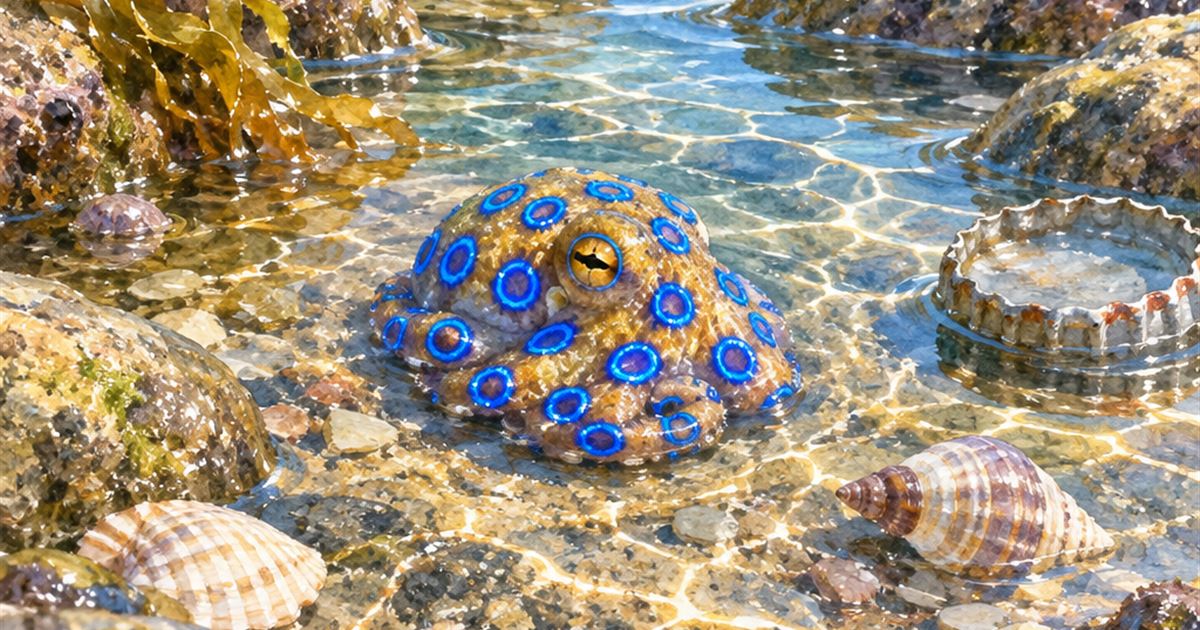
파란고리문어는 왜 파랗게 빛날까? 작지만 강한 경고 신호
골프공만 한 몸에 파란 고리 무늬가 빛나는 파란고리문어는 바다에서 가장 눈에 띄는 작은 문어예요. 그런데 이 파란색은 멋 부리는 무늬가 아니라, 건드리지 말라는 경고 신호예요. 고리는 어떻게 켜지고, 독은 어디서 나오는지, 바닷가에서는 어떻게 지내야 하는지 정리했어요.
골프공만 한 몸, 그런데 고리는 60개
파란고리문어는 한 종이 아니라 여러 종이 모인 무리예요. 몸통은 4~6cm, 팔을 펼쳐도 20cm 안팎이라서 골프공 정도 크기로 이야기해요(대산호초재단 자료). 따뜻한 연안의 얕은 바위 웅덩이부터 수심 50m 정도까지 살고, 호주 해역을 중심으로 일본 근해까지 넓게 퍼져 있어요(호주해양과학연구소 AIMS 자료).
- 평소에는 갈색이나 회색빛 몸으로 바위와 섞여 숨어 있어요.
- 주로 밤이나 해 질 녘에 새우, 게 같은 갑각류와 작은 물고기를 사냥해요.
- 위협을 느끼면 그제야 몸 곳곳에서 파란 고리가 나타나요.
경고 신호는 0.3초 만에 켜져요
연구에 따르면 파란고리문어(Hapalochlaena lunulata)는 몸통, 머리, 팔에 걸쳐 약 60개의 파란 고리를 한꺼번에 번쩍 켤 수 있고, 이 신호는 빠르면 0.3초 만에 완성돼요. 고리 안에는 빛을 반사하는 얇은 층이 쌓여 있고, 평소에는 근육이 이 부분을 덮어 숨겨 두었다가, 근육이 풀리면 고리가 드러나는 방식이에요. 고리 아래와 주변의 짙은 색 세포가 파란색을 더 또렷하게 만들어 줘요.
이렇게 눈에 띄는 색으로 "나는 위험해요"라고 알리는 방법을 경고색(aposematism)이라고 불러요. 독개구리처럼 늘 화려한 동물과 달리, 파란고리문어는 평소엔 조용히 숨어 있다가 필요할 때만 신호를 켜는 점이 특별해요.
독은 어디서 올까? 그래서 만지면 안 돼요
파란고리문어의 침샘에는 공생하는 세균이 살고, 이 세균이 테트로도톡신(TTX)이라는 신경독을 만들어요. 신경이 보내는 신호를 막아서 근육이 움직이지 못하게 하는 강한 독이에요(영국 자연사박물관 자료). 서호주 정부(DPIRD) 자료는 이 문어에게 물리면 아프지 않아도 약 90분 안에 마비가 올 수 있다고 안내해요.
- 대산호초재단은 이 문어가 사람을 먼저 공격하기보다 방어하는 동물이고, 물리는 일은 드물며 주로 손으로 잡았을 때 생긴다고 설명해요.
- AIMS는 사망 사례가 최소 3건(호주 2건, 싱가포르 1건) 알려져 있다고 정리해요.
- 호주 박물관은 화려한 색에 끌려 아이들이 집어 들 수 있다는 점을 가장 큰 위험으로 꼽아요.
정리하면 겁낼 필요는 없지만, 보더라도 절대 만지지 않는 것이 가장 중요해요.
바위 웅덩이와 바닷가 쓰레기, 조심할 점
서호주 정부(DPIRD) 자료를 보면 파란고리문어는 바위 웅덩이, 바위 틈, 빈 조개껍데기, 그리고 버려진 병에서도 발견돼요. 그래서 죽은 조개껍데기나 빈 캔, 병을 다룰 때도 조심하라고 당부하고 있어요. 바닷가에 쓰레기가 남아 있으면 사람에게도, 작은 바다 생물에게도 예상치 못한 상황이 생길 수 있다는 뜻이에요. 해양쓰레기가 왜 문제인지는 해양쓰레기 도감에서 이어서 볼 수 있어요.
바위 웅덩이에서 작은 생물을 만났다면 이렇게 해 보세요.
- 눈으로만 보고, 손이나 도구로 건드리지 않아요.
- 무늬가 예쁘다고 집어 올리지 않고, 아이들에게도 먼저 알려 줘요.
- 쓰레기를 주울 때는 병이나 캔 안을 손으로 더듬지 말고 조심해서 다뤄요.
My Little Sea에서 만나는 파란고리문어
My Little Sea 도감에서 파란고리문어는 에픽 등급 친구예요. 에픽 알을 부화시키면 만날 수 있고, 도감에는 실제 파란고리문어의 크기와 독, 경고 신호 이야기가 함께 적혀 있어요. 자세한 내용은 파란고리문어 도감 페이지에서 볼 수 있어요. 문어가 주인공인 인스타툰 문어 대리는 손이 모자라 1화도 쉬어 가기 좋아요. 오늘 저녁엔 화면 속 파란 고리를 구경하면서, 진짜 바다에서는 눈으로만 보자는 약속을 떠올려 보세요.
The blue-ringed octopus, a golf-ball-sized animal with glowing blue rings, is one of the most eye-catching small creatures in the sea. But that blue is not decoration. It is a signal that means "do not touch me." Here is how the rings switch on, where the venom comes from, and how to behave on the shore.
Golf-Ball Sized, With About 60 Rings
The blue-ringed octopus is not a single species but a group of species. The body is 4 to 6 cm long and the arm span is up to about 20 cm, so people often compare it to a golf ball (Great Barrier Reef Foundation). It lives in warm coastal waters from shallow rock pools down to about 50 m, with a range from the Sea of Japan to southern Australia (Australian Institute of Marine Science, AIMS).
- Most of the time it is brownish or greyish and blends in with the rocks.
- It hunts mainly at night or dusk, eating crustaceans such as shrimp and crabs, and small fish.
- Only when it feels threatened do the blue rings appear across its body.
A Warning Signal That Switches On in 0.3 Seconds
According to research, the blue-ringed octopus (Hapalochlaena lunulata) can flash about 60 blue rings across its mantle, head and arms at once, and the full display can take as little as 0.3 seconds. Each ring contains stacked light-reflecting layers. Muscles normally cover them, and when those muscles relax, the iridescence is exposed. Dark pigment cells beneath and around each ring make the blue stand out even more.
Using a bright color to announce "I am dangerous" is called aposematism. Unlike poison dart frogs, which always look colorful, the blue-ringed octopus stays hidden and only turns on its signal when it needs to.
Where the Venom Comes From, and Why You Should Not Touch
Symbiotic bacteria in the octopus's salivary glands produce tetrodotoxin (TTX), a strong neurotoxin that blocks nerve signals and stops muscles from contracting (Natural History Museum, London). Western Australia's Department of Primary Industries and Regional Development (DPIRD) notes that a bite can be painless, with paralysis setting in within about 90 minutes.
- The Great Barrier Reef Foundation describes the animal as defensive rather than aggressive, with bites that are rare and usually happen when it is handled.
- AIMS lists at least three known deaths: two in Australia and one in Singapore.
- The Australian Museum points out that small children drawn to its bright colors may be tempted to pick it up, which is the biggest danger.
In short, there is no need to panic, but the most important rule is to look, never touch.
Rock Pools, Beach Litter and What to Watch For
According to DPIRD, blue-ringed octopuses are found in rock pools, rock crevices, empty shells and even discarded bottles. DPIRD urges people to be careful when handling dead shells, empty cans and bottles. In other words, litter left on the shore can create unexpected situations for both people and small sea creatures. You can read more about why marine debris matters in our Trash Guide.
If you meet a small creature in a rock pool, try this:
- Watch with your eyes only, and do not poke it by hand or with a tool.
- Do not pick it up because it looks pretty, and tell children about this first.
- When picking up litter, do not reach into bottles or cans with your bare hand.
Meeting the Blue-Ringed Octopus in My Little Sea
In the My Little Sea guide, the blue-ringed octopus is an Epic grade friend. You can meet it by hatching an Epic egg, and its guide page includes real facts about its size, venom and warning display. You can read more on the Blue-Ringed Octopus guide page. Our octopus Instagram comic, Octopus Daeri Needs More Hands, Episode 1, is a nice break too. Tonight, enjoy the blue rings on screen, and remember the promise to only look at the real ones in the sea.

나만의 작은 바다, 직접 가꿔볼까요?
쓰레기를 치우고 수초와 산호를 심어 물고기를 키우는 힐링 게임 My Little Sea. 잔잔한 파도 소리와 함께 하루 끝에 물멍 한 스푼.
Clean up the trash, plant seaweed and coral, and raise fish in My Little Sea, a relaxing ocean game. Unwind at the end of the day with calm wave sounds.
참고 자료
- Great Barrier Reef Foundation, Blue-Ringed Octopus Facts
- Journal of Experimental Biology (2012), How does the blue-ringed octopus flash its blue rings?
- PubMed, Mathger et al. (2012), blue ring flashing mechanism
- Natural History Museum (London), The blue-ringed octopus: small, vibrant and exceptionally deadly
- Australian Institute of Marine Science (AIMS), Blue ringed octopus
- Western Australia DPIRD, Fun Fact Sheet: Blue Ringed Octopus
- The Australian Museum, Blue-lined Octopus
- Fishing Tasmania, Blue Ringed Octopus
- My Little Sea 물고기 도감, 파란고리문어
- 대표 이미지는 AI로 생성했어요. (Cover image generated with AI.)