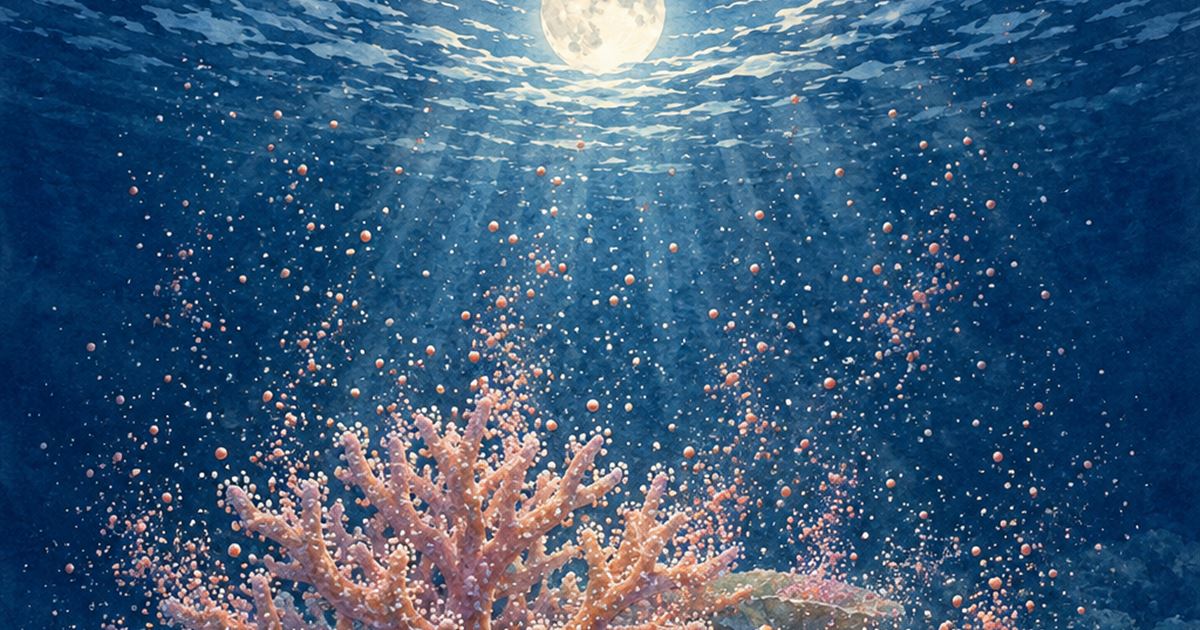
산호 산란이란? 보름달 뒤 바다에 눈이 내리는 밤
보름달이 뜬 뒤 며칠 밤, 호주 그레이트배리어리프에서는 산호가 한꺼번에 알과 정자 덩어리를 내보내요. 물속에 눈보라가 치는 것처럼 보여서 산호 산란이라는 이 현상은 바다에서 가장 신기한 번식 장면으로 꼽혀요. 산호는 움직이지 못하는데 어떻게 짝을 찾는지, 언제 일어나는지, 올해는 언제쯤일지 정리했어요.
산호는 움직이지 못하는데, 어떻게 짝을 찾을까?
미국 해양대기청(NOAA)은 돌산호 무리가 알과 정자를 같은 시간에 한꺼번에 내보내며 번식한다고 설명해요. 호주 그레이트배리어리프 해양공원청(GBRMPA) 자료에서는 이 모습을 눈보라 같은 현상이라고 하고, 분홍색, 노란색, 주황색 구름처럼 보일 수 있다고 안내해요.
- 산호 폴립은 알과 정자가 함께 든 작은 덩어리(번들)를 물속으로 내보내요.
- 덩어리는 수면으로 떠올라 같은 종의 다른 덩어리를 만나야 수정이 돼요(대산호초재단 자료).
- 한꺼번에 내보내면 짝을 만날 가능성이 높아져요. 대산호초재단은 이것을 대규모 동시 산란의 이유로 설명해요.
언제 일어날까? 보름달과 수온이 신호예요
GBRMPA에 따르면 산란은 수온과 달의 주기가 신호가 되고, 보통 10월, 11월, 12월 보름달 뒤 1~6일 밤 사이에 일어나요. 대산호초재단은 연안 산호초는 주로 10월에, 바깥쪽 산호초는 11월이나 12월에 산란한다고 설명해요. 산란은 밤에만 일어나고 며칠에서 길게는 일주일 정도 이어져요.
같은 곳에 사는 산호라도 종마다 산란하는 날이 달라서, 다른 종끼리 섞이는 일을 줄인다고 해요(대산호초재단 자료). NOAA 산호 질병·건강 컨소시엄은 정확한 날은 달의 모양이 알려 주고, 정확한 시각은 해가 진 뒤 어둠이나 달이 뜬 뒤의 빛이 신호가 되는 것으로 보인다고 정리해요. 정확한 원리는 아직 다 밝혀지지 않았어요.
올해는 언제쯤? 11월 24일 보름달 이후
timeanddate.com 자료로 올해 11월 보름달은 협정세계시 기준 11월 24일 14시 53분이에요. 한국 시간으로는 11월 24일 밤 11시 53분 무렵이에요. 앞의 GBRMPA 안내(보름달 뒤 1~6일 밤)를 이 날짜에 대 보면 바깥쪽 산호초의 산란은 11월 말에서 12월 초 사이일 가능성이 있어요. 다만 이건 안내 문구를 올해 달력에 대 본 추정이고, 실제 날짜는 수온과 바다 상태에 따라 달라져요. 12월 보름달은 12월 24일이어서 그때 한 번 더 산란이 있을 수도 있어요.
산란 뒤에는 무슨 일이 생길까?
GBRMPA 자료에 따르면 수정된 알은 헤엄치는 작은 유생(플라눌라)이 되고, 이 유생이 바닥에 자리를 잡으면 새 산호 군체로 자라요. 그런데 살아남기는 쉽지 않아요. 대산호초재단은 산호 새끼 가운데 첫 해를 넘기는 비율이 1%보다 낮다고 설명해요.
- 산란이 밤에 일어나는 이유 중 하나는 알과 정자를 먹는 동물을 피하기 위해서예요(GBRMPA 자료).
- 산란 시기는 연구자에게도 중요한 때예요. 대산호초재단은 이때 산호의 알과 정자를 모아 새끼 산호를 길러 훼손된 산호초에 옮기는 '산호 IVF'를 한다고 소개해요.
- 산호가 열 스트레스로 백화되면 번식에도 부담이 될 수 있어요. 백화 이야기는 산호 백화현상이란? 글에서 볼 수 있어요.
산호를 키우는 게임 속 바다와 연결해 보면
My Little Sea의 수초 도감에는 산호 20종이 들어 있어요. 수초 도감에서 산호를 구경하고 나면, 같은 산호가 실제 바다에서는 1년에 한두 번, 며칠 밤에만 이렇게 대규모 번식을 한다는 점을 떠올려 볼 수 있어요. 퇴근 후 물멍을 하는 짧은 시간에 달이 바다에 주는 영향을 한 번쯤 생각해 보는 것도 좋아요.
On a few nights after the full moon, corals on Australia's Great Barrier Reef release bundles of eggs and sperm all at once. It looks like a snowstorm under the water, and coral spawning is often called one of the most amazing breeding events in the ocean. Corals cannot move, so how do they find mates, when does it happen, and when might it happen this year?
Corals Cannot Move, So How Do They Find Mates?
NOAA explains that hard corals reproduce by releasing eggs and sperm at the same time. The Great Barrier Reef Marine Park Authority (GBRMPA) describes the scene as a snow-storm-like event, with clouds that can look pink, yellow and orange.
- Coral polyps release small bundles that hold eggs and sperm into the water.
- The bundles rise to the surface, and each must meet a bundle of the same species to be fertilised (Great Barrier Reef Foundation).
- Releasing everything at once raises the chance of finding a match, which is how the Foundation explains mass spawning.
When Does It Happen? The Full Moon and Water Temperature Are the Cues
According to GBRMPA, water temperature and the lunar cycle trigger spawning, which usually happens one to six nights after the October, November and December full moons. The Foundation says inshore reefs usually spawn in October, while outer reefs spawn in November or December. Spawning only happens at night and lasts from a few days to about a week.
Even on the same reef, different species spawn on different days, which helps prevent cross-breeding (Great Barrier Reef Foundation). NOAA's Coral Disease and Health Consortium says the moon phase signals the day, and darkness after sunset or light after moonrise is thought to signal the exact time. The full mechanism is still not completely understood.
When This Year? After the November 24 Full Moon
According to timeanddate.com, this November's full moon peaks at 14:53 UTC on November 24. In Korea that is around 11:53 p.m. on November 24. Applying GBRMPA's guidance (one to six nights after the full moon) to that date, outer reef spawning could fall between late November and early December. That is an estimate from the guidance and this year's calendar, and the real dates depend on water temperature and sea conditions. The December full moon is on December 24, so there may be another spawning then.
What Happens After Spawning?
GBRMPA explains that fertilised eggs develop into tiny free-swimming larvae called planulae, and when they settle on the reef they can grow into new coral colonies. Survival is hard, though. The Great Barrier Reef Foundation says fewer than 1% of baby corals survive their first year.
- One reason spawning happens at night is to protect the eggs and sperm from predators (GBRMPA).
- Spawning is also a key time for researchers. The Foundation describes "Coral IVF", where eggs and sperm are collected, baby corals are raised, and they are delivered to damaged reefs.
- When corals bleach from heat stress, reproduction can also be strained. Read more in What Is Coral Bleaching?.
Connecting It to the Coral in the Game
The My Little Sea plant guide includes 20 kinds of coral. After browsing them in the plant guide, you can remember that real corals do this mass breeding only once or twice a year, on just a few nights. During a short after-work aquarium break, it is a nice thought that the moon shapes life in the sea.
나만의 작은 바다, 직접 가꿔볼까요?
쓰레기를 치우고 수초와 산호를 심어 물고기를 키우는 힐링 게임 My Little Sea. 잔잔한 파도 소리와 함께 하루 끝에 물멍 한 스푼.
Clean up the trash, plant seaweed and coral, and raise fish in My Little Sea, a relaxing ocean game. Unwind at the end of the day with calm wave sounds.
참고 자료
- Great Barrier Reef Marine Park Authority, Coral spawning 101
- Great Barrier Reef Foundation, What is coral spawning?
- Great Barrier Reef Foundation, Coral spawning: why is it such a critical time for Reef recovery?
- NOAA National Ocean Service, What is coral spawning?
- NOAA Coral Disease & Health Consortium, Coral Reproduction
- timeanddate.com, The Moon in November 2026
- 대표 이미지는 AI로 생성했어요. (Cover image generated with AI.)