청어 이야기: 과메기의 원조, 겨울 바다의 은빛 물고기
찬 바람이 불기 시작하면 '청어'를 찾는 분이 늘어나요. 과메기 철이 다가오고, 시장에도 알이 꽉 찬 청어가 보이기 시작하거든요. 오늘은 식탁 위 생선으로만 알던 청어가 바닷속에서는 어떻게 사는지, 겨울마다 우리 바다를 찾아오는 이유와 밤에 내는 신기한 소리까지 정리해 봤어요.
청어는 어떤 물고기일까요?
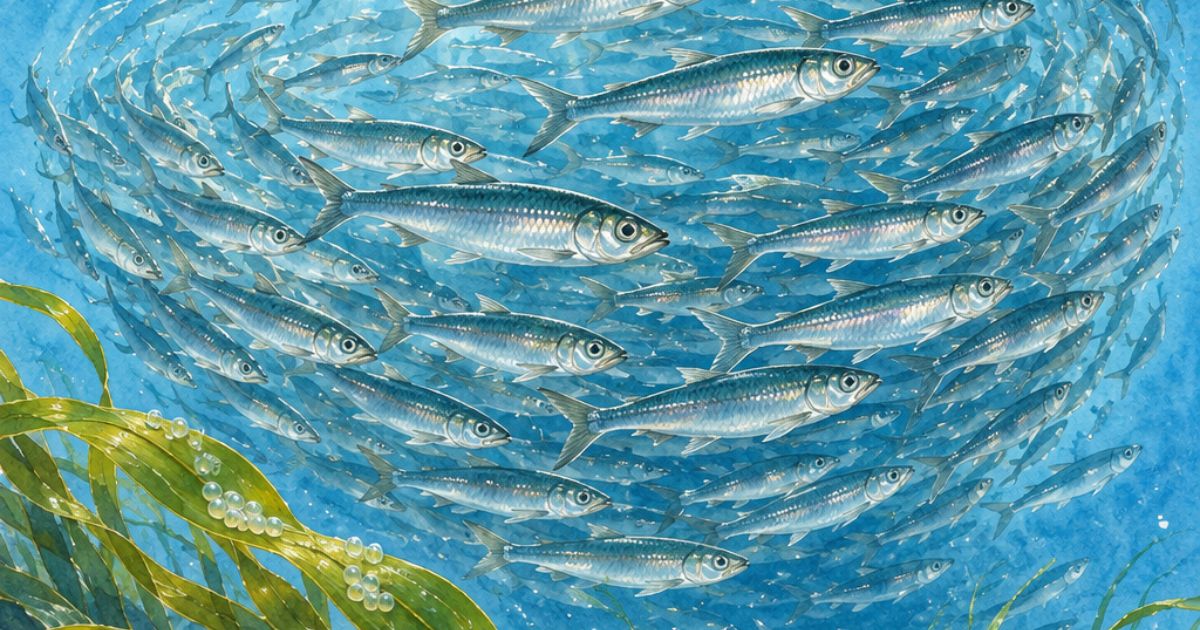
우리 바다의 청어는 학명이 Clupea pallasii예요. 영어로는 태평양청어(Pacific herring)라고 불러요. 청어목 청어과의 바닷물고기로, 등이 짙은 청색이라 '청어(靑魚)'라는 이름이 붙었어요. 배 쪽은 은백색이고, 몸은 옆으로 납작하며 보통 30cm 안팎까지 자라요.
정어리와 생김새가 아주 비슷해서 헷갈리기 쉬운데, 청어는 아가미 덮개가 매끈하고 옆구리에 점이 없어요. 지역마다 부르는 이름도 달라서 동해에서는 '등어', 경북에서는 '푸주치'라고 부르기도 했어요.
등은 어둡고 배는 밝은 이 색 배치는 숨는 데 쓰여요. 위에서 내려다보면 어두운 바닷물과, 아래에서 올려다보면 밝은 수면과 비슷해 보여서 천적 눈에 잘 띄지 않아요.
차가운 바다에서 큰 무리로 살아요
청어는 찬물을 좋아하는 한류성 물고기예요. 수온 2~10℃, 수심 150m보다 얕은 연안에서 무리를 지어 살아요. 큰 무리는 수백만 마리까지 모이는데, 한 몸처럼 움직이는 무리 속에서는 천적이 한 마리를 골라 잡기 어려워요.
청어는 작은 플랑크톤을 먹고 자라고, 다시 더 큰 물고기와 바닷새, 해양 포유류의 먹이가 돼요. 그래서 연구자들은 청어를 '바다 먹이사슬의 허리'라고 불러요.
겨울이면 해안으로 와서 해초에 알을 붙여요
청어가 겨울에 유난히 눈에 띄는 이유는 산란 때문이에요. 평소에는 흩어져 지내던 청어가 알을 낳을 때가 되면 큰 무리를 지어 얕은 연안으로 몰려와요. 그리고 해초나 잘피, 바위 위에 알을 낳는데, 수정된 알은 끈적해져서 그 자리에 단단히 붙어요.
우리나라에서는 경남 진해만이 대표적인 산란장이에요. 국립수산과학원과 경상국립대 연구진이 잠수 조사를 해 보니, 진해만 청어의 산란은 12월 말, 평균 수온 7.7℃ 무렵에 시작됐어요. 진해만 저도 연안에서는 바닥 1㎡에 수정란이 평균 74만 개 정도 붙어 있었다고 해요.
2026년 10월에 발표된 연구에서는 바닷물에 남은 DNA만으로 청어의 움직임을 추적했어요. 그 결과 청어는 바닥 수온이 10℃ 가까이 내려간 뒤에야 산란장으로 들어왔어요. 진해만은 북서태평양의 주요 청어 산란장 가운데 가장 남쪽에 있어서, 겨울 바다가 계속 따뜻해지면 이 산란장이 사라질 수 있다는 경고도 함께 나왔어요.
밤에는 '틱틱' 소리로 신호를 보낸다?
청어에게는 조금 웃긴 비밀도 있어요. 캐나다와 영국 연구진이 수조 속 청어를 밤새 녹음하고 적외선 카메라로 찍어 보니, 청어가 꽁무니 쪽에서 가는 공기 방울을 내보낼 때 '틱틱틱' 하는 빠른 소리가 났어요. 연구진은 이 소리에 FRT(Fast Repetitive Tick)라는 이름을 붙였어요.
이 소리는 주로 밤에 났고, 먹이를 줘도 횟수가 변하지 않아서 소화 가스는 아닌 것으로 봤어요. 연구진은 부레의 공기가 빠져나오면서 나는 소리로 추정했어요. 또 수조 안에 청어가 많을수록 한 마리가 내는 소리도 늘어서, 어두운 밤에 무리끼리 주고받는 신호일 수 있다고 봤어요. 정확한 쓰임은 아직 밝혀지지 않았어요.
과메기는 원래 청어로 만들었어요
겨울 별미 과메기의 원조는 청어예요. 과메기라는 이름도 청어의 눈을 꼬챙이로 꿰어 말렸다는 '관목(貫目)'에서 왔어요. 그런데 1960년대 이후 청어가 크게 줄면서 꽁치로 만드는 과메기가 많아졌어요.
청어는 오래전부터 귀한 대접을 받았어요. 조선 시대 기록에는 해마다 겨울이면 영일만에서 청어가 가장 먼저 잡혀 나라에 바친 뒤에야 다른 고을이 고기잡이를 시작했다는 이야기가 남아 있어요. 이순신 장군의 《난중일기》에도 수군이 잡은 청어 7천여 급을 곡식 사러 가는 배에 실어 보냈다는 대목이 나와요.
맛이 가장 좋은 때는 산란 전인 10월부터 1월 사이예요. 이때 잡은 청어는 알이나 이리가 꽉 차 있고 기름기도 가장 많아요. 산란을 마친 청어는 속이 비고 살이 더 퍽퍽해요. 청어는 고등어, 꽁치와 같은 등푸른생선이라 EPA와 DHA 같은 오메가3 지방산도 들어 있어요.
마이리틀씨에서 만나는 청어
모바일 힐링 게임 My Little Sea(마이리틀씨)에도 은빛 청어가 '작은 물고기'로 나와요. 바다 난초, 작은 돌미역처럼 정해진 수초 5종을 심으면 청어가 찾아오는데, 실제 청어가 해초 숲에 기대어 살아가는 모습과 닮아 있어요. 게임 속 청어 정보와 청어를 부르는 수초는 청어 도감과 수초 도감에서 볼 수 있어요.
When the cold wind arrives, more people in Korea start looking up herring. It is the season for gwamegi, the wind-dried winter fish snack, and herring full of roe start showing up at the market. Here is how this familiar fish actually lives in the sea, why it comes back to Korean coasts every winter, and the odd little sound it makes at night.
What kind of fish is a herring?
The herring in Korean waters is Clupea pallasii, the Pacific herring. It belongs to the herring family, Clupeidae, and its Korean name, cheong-eo, literally means "blue fish" because of its deep blue back. The belly is silvery white, the body is slim and flattened, and it usually grows to about 30 cm.
Herring look a lot like sardines, but a herring has a smooth gill cover and no spots along its sides. Korean coastal towns once had their own names for it, such as deung-eo on the east coast.
The dark back and bright belly are camouflage. From above, the fish blends into the dark water; from below, it blends into the bright surface, so predators have a harder time spotting it.
A cold-water fish that lives in huge schools
Herring are cold-water fish. In Korea they gather in coastal waters of about 2 to 10°C and shallower than 150 m. Big schools can hold millions of fish, and when they move as one, it is hard for a predator to single out a target.
Herring grow up eating tiny plankton, and in turn feed bigger fish, seabirds and marine mammals. That is why researchers call them the waist of the ocean food chain.
In winter they come ashore to glue eggs onto seaweed
Herring stand out in winter because of spawning. Fish that spend most of the year spread out gather into big schools and head for shallow coasts. They lay eggs on seaweed, seagrass and rocks, and the fertilized eggs turn sticky so they stay attached.
In Korea, Jinhae Bay on the south coast is a key spawning ground. Divers from Korea's National Institute of Fisheries Science and Gyeongsang National University found that spawning there begins in late December, at an average water temperature of 7.7°C. Off Jeodo Island in the bay, they counted an average of about 740,000 fertilized eggs per square meter of seabed.
A study released in October 2026 tracked herring using only the DNA they leave in seawater. Herring entered the spawning ground only after the bottom water cooled to about 10°C. Jinhae Bay is the southernmost major herring spawning ground in the northwest Pacific, and the researcher warned it could disappear if winter seas keep warming.
Do herring send "tick tick" signals at night?
Herring also have a slightly funny secret. A Canadian and British team recorded captive herring overnight with microphones and infrared cameras, and found that fine streams of bubbles from near the fish's vent came with a fast ticking sound. They named it the FRT, short for Fast Repetitive Tick.
The sounds came mostly at night, and feeding did not change how often they happened, so the team ruled out digestive gas and suggested air released from the swim bladder. Each fish also made more sounds when more herring shared the tank, which hints that the ticks may help a school keep in touch in the dark. Their exact purpose is still unknown.
Gwamegi was originally made from herring
Gwamegi, the winter delicacy from Korea's east coast, started with herring. Its name comes from gwanmok, meaning fish dried with their eyes threaded on a stick. After herring catches dropped sharply from the 1960s, most gwamegi came to be made from Pacific saury instead.
Herring have been prized for centuries. Joseon-era records say the first herring of each winter were caught in Yeongil Bay and sent to the royal court before other towns began fishing. Admiral Yi Sun-sin's war diary even mentions his navy loading more than 7,000 units of herring onto a ship heading out to buy grain.
Herring taste best between October and January, before spawning, when they are full of roe or milt and at their fattiest. After spawning they are leaner and drier. Like mackerel and saury, herring are an oily fish that contains omega-3 fatty acids such as EPA and DHA.
Meet the herring in My Little Sea
In the mobile relaxing game My Little Sea, the silvery herring appears as one of the little fish. Plant five specific water plants, such as sea orchid and small sea mustard, and herring will visit your sea, a bit like real herring that rely on seaweed forests. You can find the in-game details and the plants that call them in the Herring guide and the Water Plant guide.
나만의 작은 바다, 직접 가꿔볼까요?
쓰레기를 치우고 수초와 산호를 심어 물고기를 키우는 힐링 게임 My Little Sea. 잔잔한 파도 소리와 함께 하루 끝에 물멍 한 스푼.
Clean up the trash, plant seaweed and coral, and raise fish in My Little Sea, a relaxing ocean game. Unwind at the end of the day with calm wave sounds.
참고 자료
- 수산물안전정보서비스(FSIS), 11월 이달의 수산물: 청어
- 한국민족문화대백과사전, 청어
- 한국민족문화대백과사전, 과메기
- 이용득 외 (2020), 잠수관찰을 통한 경남 진해만과 통영 연안 청어의 산란기 추정, 한국어류학회지
- 경상국립대학교 보도자료 (2026.10.06), 진해만 청어 환경DNA 연구
- NOAA Fisheries, Pacific Herring
- Oceana Canada, Pacific Herring
- Wilson, Batty & Dill (2004), Pacific and Atlantic herring produce burst pulse sounds, Biology Letters
- 대표 이미지는 AI로 생성했어요. (Cover image generated with AI.)