해마는 왜 아빠가 아기를 낳을까? 해마의 신기한 생태
말처럼 생긴 머리, 돌돌 말린 꼬리, 꼿꼿하게 서서 헤엄치는 모습까지. 해마는 바다에서 가장 독특하게 생긴 물고기 중 하나예요. 그런데 생김새보다 더 놀라운 건 사는 방식이에요. 엄마가 아니라 아빠가 배 속에 아기를 품고, 짝꿍과는 아침마다 인사 춤을 춘대요. 해마가 어떻게 살아가는지, 그리고 우리 남해에 사는 해마에는 어떤 이야기가 있는지 정리했어요.
아빠가 아기를 낳는 물고기
해마의 가장 유명한 특징은 수컷이 임신한다는 거예요. 동물 세계에서 이런 방식은 해마와 가까운 친척인 해룡, 일부 실고기에서만 볼 수 있어요. 긴 구애가 끝나면 암컷이 산란관을 이용해 수컷 배 앞쪽의 육아낭에 알을 넣어 주고, 수컷이 그 안에서 알을 수정시켜요.
육아낭은 그냥 주머니가 아니에요. 배아들이 육아낭 벽에 자리를 잡으면 가느다란 혈관을 통해 산소와 영양을 받아요. 임신 기간 동안 아빠 해마는 육아낭 속 환경을 조금씩 바닷물과 비슷하게 바꿔서, 새끼들이 바깥 세상에 나갈 준비를 하게 도와줘요.
- 임신 기간은 종과 수온에 따라 열흘 남짓에서 6주 정도예요.
- 출산할 때는 몇 시간 동안 몸을 움츠렸다 펴며 새끼를 내보내요.
- 한 번에 나오는 새끼 수는 종에 따라 몇 마리에서 1,000마리가 넘기도 해요.
태어난 새끼는 작지만 어른과 똑같이 생겼고, 바로 혼자 살아가야 해요. 어른이 될 때까지 살아남는 새끼는 1%도 안 될 만큼 적어서, 이렇게 많이 낳는 거예요.
매일 아침 인사 춤을 추는 짝꿍
해마는 한 번 번식하는 동안에는 한 짝하고만 짝을 이뤄요. 여러 종에서는 한 쌍이 오래 함께 지내기도 하는데, 모든 종이 그런 건 아니에요. 짝을 이룬 해마들은 이른 아침마다 만나 함께 인사 춤을 춰요. 나란히 헤엄치거나 빙글빙글 돌고, 몸 색을 바꾸고, 꼬리를 서로 감기도 해요. 이 춤이 둘 사이를 단단하게 이어 준다고 해요. 출근 전에 서로 안부를 묻는 다정한 커플 같지 않나요?
헤엄은 서툴러도 꼬리로 꽉 잡아요
해마는 사실 헤엄을 잘 치는 물고기가 아니에요. 등지느러미를 1초에 30~70번이나 파닥이며 앞으로 나아가고, 머리 뒤쪽의 작은 가슴지느러미로 방향을 잡아요. 그래서 빨리 도망가는 대신 다른 방법으로 살아남아요.
- 붙잡는 꼬리: 꼬리지느러미 대신 길고 감을 수 있는 꼬리로 해초, 해조류, 산호를 붙잡고 몸을 고정해요. 해마 꼬리는 단면이 네모난데, 이 모양이 잡는 힘을 높여 준다는 연구도 있어요.
- 위장의 달인: 몸 색을 주변과 비슷하게 바꿔 천적 눈을 피하고, 지나가는 먹이를 기다려요.
- 쉬지 않는 식사: 이빨 없는 긴 주둥이로 작은 새우나 요각류를 물과 함께 순식간에 빨아들여요. 먹이가 몸을 아주 빨리 지나가서 어른 해마는 계속 먹어야 해요. 두 눈을 따로따로 움직일 수 있어서 먹이 찾기에도 유리해요.
우리 남해에 사는 해마, 그리고 지켜야 할 이유
우리 바다에도 해마가 살아요. 오랫동안 남해의 해마는 1928년에 보고된 일본 종과 같은 종으로 알려져 있었어요. 그런데 국내 연구팀이 형태와 유전자를 비교해 보니 다른 종이라는 사실이 밝혀졌고, 2017년 Hippocampus haema라는 이름의 새로운 종으로 발표됐어요. 학명에 우리말 '해마'가 그대로 들어가 있고, 영어 이름도 Korean seahorse예요. 몸길이는 5~11.5cm 정도이고, 남해안의 연안 얕은 바위나 해조류가 많은 곳에서 살아요.
하지만 전 세계 해마는 쉽지 않은 시기를 보내고 있어요. 해초밭과 산호초가 사라지고, 전통 약재로 많이 쓰이고, 그물에 함께 잡히면서 여러 종이 줄어들고 있어요. 그래서 2004년부터는 모든 해마 종이 멸종위기종 국제거래협약(CITES) 부속서 II에 올라 국제 거래가 관리되고 있어요. 해마가 붙잡고 살아갈 해초와 산호를 지키는 일이 곧 해마를 지키는 일이에요.
My Little Sea에서 만나는 해마
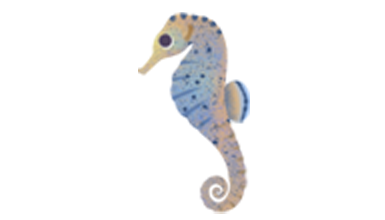
My Little Sea의 작은 물고기 친구들 중에도 해마가 있어요. 도감 설명은 '우아하게 수직으로 움직이는 바다의 귀족'이에요. 바다 쓰레기를 치우고 해초와 산호를 심어 나만의 바다를 가꾸다 보면, 꼿꼿하게 떠다니는 해마를 바라보며 잠깐 쉬어 갈 수 있어요. 오늘 저녁엔 아침마다 춤추는 해마 커플을 떠올리며 물멍 한 번 해 보세요.
A horse-like head, a curled tail and an upright way of swimming: the seahorse is one of the strangest-looking fish in the ocean. Its lifestyle is even more surprising than its looks. The father, not the mother, carries the babies, and partners greet each other with a dance every morning. Here is how seahorses live, plus the story of the seahorse that lives off the southern coast of Korea.
The Fish Where Dad Gives Birth
The most famous seahorse trait is male pregnancy. In the animal world, you only see this in seahorses and their close relatives, the seadragons and some pipefishes. After a long courtship, the female uses an ovipositor to place her eggs into the brood pouch on the front of the male's body, and he fertilizes them inside.
The pouch is much more than a pocket. The embryos settle into its wall and get oxygen and nutrients through a network of tiny blood vessels. During the pregnancy, the father gradually makes the conditions inside the pouch more like seawater, helping the young get ready for the outside world.
- Pregnancy lasts from about ten days to six weeks, depending on the species and water temperature.
- In labour, the male pumps and contracts his body for hours to push the young out.
- Depending on the species, a single brood can be just a few babies or more than 1,000.
The newborns are tiny but fully formed, and they are on their own right away. Fewer than 1% survive to adulthood, which is why seahorses have so many young at once.
Partners Who Dance Every Morning
Seahorses mate with only one partner during each breeding cycle. In many species, a pair stays together for a long time, although not in all of them. Paired seahorses meet early each morning for a greeting dance. They swim side by side, circle each other, change colour and sometimes link tails. The dance is thought to keep the pair bond strong. It is a bit like a couple checking in with each other before work.
Weak Swimmers With a Strong Grip
Seahorses are not good swimmers. They push forward by fluttering their dorsal fin 30 to 70 times per second and steer with small pectoral fins behind the head. Since they cannot outswim danger, they rely on other tricks.
- A gripping tail: Instead of a tail fin, they have a long prehensile tail that wraps around seagrass, seaweed and coral to hold them in place. The tail is square in cross-section, and a study suggests this shape improves grip.
- Masters of camouflage: They often change colour to match their surroundings, hiding from predators while waiting for prey.
- Always eating: With a long, toothless snout, they slurp up small shrimp and copepods in a flash. Food passes through them very quickly, so adults need to graze constantly. Each eye can move on its own, which helps them spot food.
Korea's Own Seahorse, and Why Seahorses Need Help
Seahorses live in Korean waters too. For decades, the seahorse off Korea's southern coast was thought to be the same as a Japanese species reported in 1928. When researchers compared body shape and DNA, it turned out to be different, and in 2017 it was described as a new species, Hippocampus haema. Its scientific name uses "haema", the Korean word for seahorse, and its English name is the Korean seahorse. It grows to about 5 to 11.5 cm and lives among rocks and seaweed in shallow coastal water.
Around the world, seahorses are having a hard time. Seagrass beds and coral reefs are disappearing, seahorses are heavily used in traditional medicine, and many are caught as bycatch in fishing nets, so a number of species are declining. Since 2004, all seahorse species have been listed in Appendix II of CITES, the international treaty on wildlife trade, so their trade has to be managed. Protecting the seagrass and coral they hold on to is one of the best ways to protect seahorses.
Meet the Seahorse in My Little Sea
The seahorse is one of the small fish you can meet in My Little Sea, described in the in-game guide as "the noble of the sea that moves elegantly in vertical motion." As you clear away trash and plant seaweed and coral in your own little sea, you can take a short break and watch it drift upright. Tonight, try some quiet fish watching and picture a seahorse couple getting ready for their morning dance.
나만의 작은 바다, 직접 가꿔볼까요?
쓰레기를 치우고 수초와 산호를 심어 물고기를 키우는 힐링 게임 My Little Sea. 잔잔한 파도 소리와 함께 하루 끝에 물멍 한 스푼.
Clean up the trash, plant seaweed and coral, and raise fish in My Little Sea, a relaxing ocean game. Unwind at the end of the day with calm wave sounds.
참고 자료
- NOAA Ocean Service: How do seahorses differ from all other animals?
- Project Seahorse: Reproduction
- Natural History Museum: Are seahorses the ocean's quirkiest fish?
- Han et al. (2017), ZooKeys: Description of Hippocampus haema, a new species from Korea and Japan
- 연합뉴스: 남해 해마, 89년 만에 새로운 종으로 확인 (2021.3.18)
- IUCN Seahorse, Pipefish & Seadragon Specialist Group: CITES for seahorses