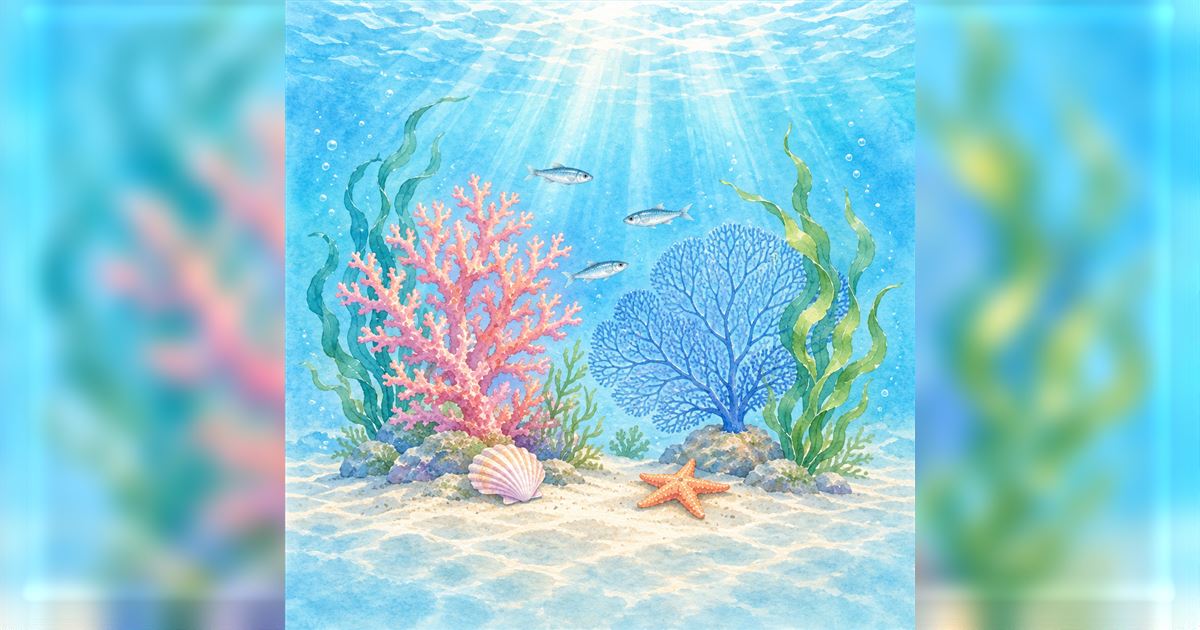
My Little Sea 수초 도감: 해초·산호·조개 48종과 진짜 바다 이야기
My Little Sea에서 쓰레기를 치우고 나면 빈 바다를 채워 주는 건 수초예요. 게임에는 수초가 모두 48종 있고, 어떤 수초를 심느냐에 따라 찾아오는 작은 물고기도 달라져요. 오늘은 48종을 한눈에 정리하고, 게임에서는 수초 칸에 들어 있지만 실제로는 동물인 산호 이야기와 진짜 바다에서 수초가 하는 일을 함께 알아볼게요.
수초 48종 한눈에 보기
게임 속 수초는 네 갈래로 나뉘어요. 수초 도감 페이지에 정리된 숫자와 이름이에요.
- 해초 22종: 살랑거리는 푸른 해초, 마린 브리즈, 바다맨드라미, 작은 돌미역 등
- 산호 20종: 핑크빛 가지 산호, 체리 블라썸 산호, 푸른 뇌모양 산호 등
- 불가사리 1종: 별사탕쿠키 불가사리
- 조개·소라 5종: 빛나는 별빛 조개, 유니콘의 뿔소라, 바다 우렁이, 신비로운 소라, 다채로운 색상의 소라
이름만 읽어도 어떤 모습일지 그려지는 수초가 많아요. 전체 목록과 그림은 수초 도감에서 볼 수 있어요.
수초를 심으면 작은 물고기가 찾아와요
수초 도감은 수초를 심으면 찾아오는 작은 물고기를 함께 보여 줘요. 예를 들어 살랑거리는 푸른 해초와 핑크빛 가지 산호는 정어리, 마린 브리즈와 빛나는 닭볏 모양의 산호는 학꽁치, 신비로운 긴 이파리 해초와 긴 모래빛 물결 해초는 해마와 짝을 이루는 식이에요. 수초 48종이 작은 물고기 11종에 나뉘어 연결돼 있어서, 어떤 물고기를 만나고 싶은지에 따라 심을 수초를 골라 보는 재미가 있어요.
작은 물고기 11종 각각의 실제 이야기는 작은 물고기 도감 글에 정리해 두었어요.
게임에서는 수초, 진짜 바다에서는 동물인 산호
My Little Sea에서는 산호도 수초 칸에 들어 있어요. 그런데 실제 산호는 식물이 아니라 동물이에요. 미국 해양대기청(NOAA)에 따르면 산호는 식물처럼 스스로 먹이를 만들지 않고, 작은 촉수로 물속의 먹이를 잡아먹어요.
우리가 산호라고 부르는 덩어리는 대부분 폴립이라는 작은 산호 생물 수백에서 수천 마리가 모인 거예요. 폴립은 석회질 뼈대를 만들어 바위나 다른 폴립의 뼈대에 붙어요. 대부분의 산호 안에는 주산텔라라는 식물 같은 조류가 함께 살아요. 이 조류는 광합성으로 산소와 양분을 만들어 주고, 산호는 안전한 집을 내줘요. 이 둘의 관계가 흐트러지면 무슨 일이 생기는지는 산호 백화현상 글에 정리해 두었어요.
진짜 바다에서도 수초는 물고기의 집이에요
NOAA는 켈프를 차갑고 얕은 바다에 사는 큰 갈조류라고 설명해요. 켈프가 숲처럼 빽빽하게 자란 곳은 수천 종의 물고기와 무척추동물, 바다 포유류에게 먹이와 쉴 곳을 줘요. 좋은 조건에서는 하루에 최대 18인치(약 45cm)까지 자란다고 해요.
스미스소니언 해양 포털은 많은 게, 새우, 물고기가 어린 시절을 켈프 뿌리 근처의 안전한 곳에서 보낸다고 소개해요. 그래서 켈프 숲은 어린 생물이 자라는 보육 서식지로 여겨져요. 켈프 숲 바닥에는 불가사리, 게, 달팽이, 성게, 말미잘 같은 바닥 생물도 살아요. 게임 속 불가사리와 조개 수초가 떠오르는 모습이죠.
잘피 같은 물속 풀밭도 비슷해요. NOAA 수산국은 미국 남동부 해역의 설명에서, 물속 풀밭에는 근처 모래 바닥보다 동물이 10배에서 100배 많다고 밝혀요. 수초가 물고기의 집이라는 말이 과장이 아닌 거예요.
나만의 수초 정원을 가꿔 보세요
My Little Sea에서는 쓰레기를 치운 자리에 수초와 산호를 심어 가며 바다를 채워요. 수초가 늘수록 찾아오는 작은 물고기도 늘어나서, 바다가 조금씩 북적이는 모습을 볼 수 있어요. 퇴근 후에 수초가 살랑이는 화면을 천천히 바라보며 하루를 내려놓아 보세요. 어떤 물고기가 있는지 궁금하다면 물고기 도감도 함께 둘러보세요.
After you clear the trash in My Little Sea, it is the plants that fill the empty water. The game has 48 kinds of sea plants, and which ones you plant changes which small fish come to visit. Today we will go through all 48 at a glance, then look at corals, which sit in the plant section of the game but are actually animals, and at what plants really do in the ocean.
All 48 Plants at a Glance
The plants in the game fall into four groups, based on the numbers and names listed on the plant guide page.
- 22 seaweeds: Swaying Blue Seaweed, Marine Breeze, Sea Marigold, Small Rock Kelp and more
- 20 corals: Pink Branch Coral, Cherry Blossom Coral, Blue Brain Coral and more
- 1 starfish: the Candy Cookie Starfish
- 5 shells and conchs: five shells with names like Unicorn Horn Conch and Mysterious Conch
Many names tell you right away what the plant looks like. The full list with pictures is on the Plant Guide page.
Plant Them and Small Fish Come to Visit
The Plant Guide also shows which small fish come to visit each plant. For example, Swaying Blue Seaweed and Pink Branch Coral go with the sardine, Marine Breeze and the glowing cockscomb-shaped coral go with the halfbeak, and the Mysterious Long Leaf Seaweed and Long Sandy Wave Seaweed go with the seahorse. The 48 plants are split across 11 kinds of small fish, so you can pick what to plant based on who you would like to meet.
The real stories behind each of the 11 small fish are in our small fish guide.
A Plant in the Game, an Animal in the Ocean: Coral
In My Little Sea, corals are in the plant section. In real life, though, corals are animals, not plants. According to NOAA, corals do not make their own food the way plants do. They use tiny tentacles to catch food from the water.
Most of what we call a coral is a group of hundreds to thousands of tiny coral animals called polyps. Polyps build a hard limestone skeleton and attach to rock or to the skeletons of other polyps. Most corals also host plant-like algae called zooxanthellae. The algae supply oxygen and nutrients from photosynthesis, and the coral gives them a protected home. What happens when this partnership breaks down is covered in our coral bleaching article.
In the Real Ocean, Plants Are Fish Homes Too
NOAA describes kelp as large brown algae that live in cool, shallow water. Where kelp grows thick like a forest, it gives food and shelter to thousands of species of fish, invertebrates and marine mammals. In ideal conditions it can grow up to 18 inches (about 45 cm) a day.
The Smithsonian Ocean portal says many crabs, shrimp and fish spend the early part of their lives in the safety of kelp roots, which is why kelp forests count as nursery habitat. At the base of a kelp forest live sea stars, crabs, snails, sea urchins and anemones. It is a bit like the starfish and shell plants in the game.
Underwater meadows such as seagrass beds work in a similar way. In an explanation about the southeastern United States, NOAA Fisheries says animal abundance in grass beds is 10 to 100 times higher than over nearby sandy seafloor. Saying that plants are homes for fish is no exaggeration.
Grow Your Own Plant Garden
In My Little Sea you fill the cleared water with plants and corals bit by bit. As the plants grow, more small fish come to visit and the sea slowly gets busier. After work, take a slow look at plants swaying on the screen and let the day go. If you are curious about which fish live there, take a look at the fish guide too.
나만의 작은 바다, 직접 가꿔볼까요?
쓰레기를 치우고 수초와 산호를 심어 물고기를 키우는 힐링 게임 My Little Sea. 잔잔한 파도 소리와 함께 하루 끝에 물멍 한 스푼.
Clean up the trash, plant seaweed and coral, and raise fish in My Little Sea, a relaxing ocean game. Unwind at the end of the day with calm wave sounds.
참고 자료
- NOAA National Ocean Service, Are corals animals or plants?
- NOAA National Ocean Service, What is a kelp forest?
- Smithsonian Ocean, Kelp and Kelp Forests
- NOAA Office of National Marine Sanctuaries, Kelp Forest
- NOAA Fisheries, Why Is Submerged Aquatic Vegetation Designated As Essential Fish Habitat?
- 대표 이미지는 AI로 생성했어요. (Cover image generated with AI.)