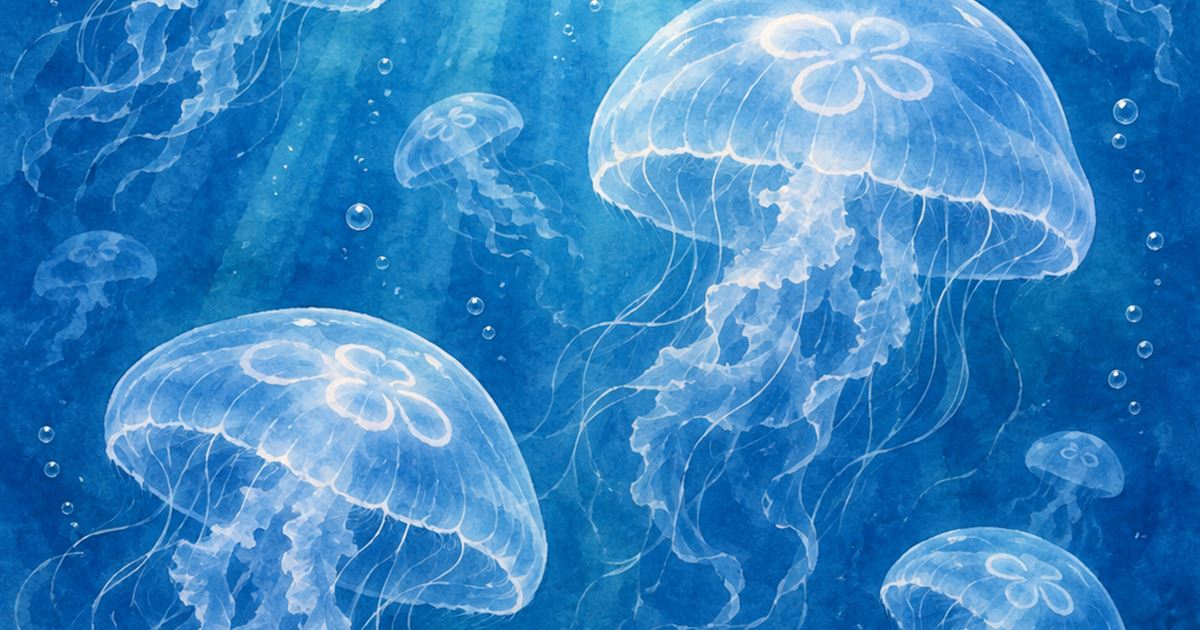
해파리 특징과 쏘였을 때 응급처치: 바닷물로 씻고 수돗물은 금지
여름 바다의 불청객이지만 수족관에서는 물멍 1순위인 해파리. 몸의 대부분이 물이고, 뇌도 심장도 없는 신기한 생물이에요. 우리 바다에 나오는 해파리와 쏘였을 때 해야 할 일을 공식 자료로 정리했어요.
뇌도 심장도 없이 사는 법
해파리 몸은 바깥층, 젤리처럼 말랑한 가운데층, 안쪽층 세 겹으로 되어 있어요. 뇌 대신 몸 전체에 퍼진 신경망으로 빛과 냄새를 느끼고, 입과 항문이 하나의 구멍이에요.[1]
몸의 약 95%가 물이라서 물 밖으로 꺼내면 금세 흐물흐물한 덩어리가 돼요.[1]
우리 바다에 나오는 독성 해파리
- 노무라입깃해파리: 우리 바다에 나오는 해파리 중 가장 커요(최대 약 2m). 6~12월 전국에 나타나요.
- 작은부레관해파리: 푸른 삼각형 공기주머니로 물 위에 떠 있는 맹독성 해파리예요(5~8월, 제주·남해). 해변에 밀려온 것을 비닐봉지로 착각해 쏘이기도 해요.
- 유령해파리: 우산 아래 하얀 촉수가 덩어리져 있어요.
출처[3]
해파리에 쏘였을 때 응급처치
- 바로 물 밖으로 나와요.
- 남은 촉수는 나무젓가락이나 신용카드 같은 플라스틱 카드로 떼어 내요(맨손 금지).
- 바닷물이나 생리식염수로 충분히 씻어요. 수돗물·생수·알코올로 씻으면 독침이 더 터질 수 있어요.
- 쏘인 곳을 문지르거나 붕대로 꽉 감지 않아요.
- 통증이 남으면 온찜질(45℃ 안팎), 붉게 붓는다면 냉찜질을 해요.
- 호흡곤란, 의식 흐림, 온몸 통증이 있으면 바로 119에 신고해요.
출처[2]
해파리 피하는 법
- 바다에 들어갈 때 피부가 덜 드러나는 옷을 입어요.
- 해변에서 죽은 해파리도 만지지 않아요.
- 해파리를 보면 안전요원에게 알려요. 국립수산과학원 누리집에서 해파리 출현 정보를 미리 볼 수 있어요.
출처[4]
자주 묻는 질문
해파리에 쏘이면 수돗물로 씻어도 되나요?
안 돼요. 수돗물이나 생수 같은 민물은 독침 발사를 늘릴 수 있어요. 바닷물이나 생리식염수로 씻어요.
해파리는 뇌가 있나요?
없어요. 뇌, 피, 심장 없이 몸 전체에 퍼진 신경망으로 빛과 냄새를 느껴요.
Jellyfish Facts and First Aid for Stings: Rinse with Seawater, Not Tap Water
Jellyfish are unwelcome guests at the summer beach, yet they are the top pick for calm aquarium gazing. They are mostly water and live without a brain or a heart. We gathered official information on the jellyfish in Korean seas and what to do if you get stung.
Living without a brain or a heart
A jellyfish body has three layers: an outer layer, a soft jelly-like middle layer and an inner layer. Instead of a brain, a nerve net spread through the body senses light and smell, and a single opening works as both mouth and anus.[1]
Because it is about 95% water, a jellyfish quickly turns into a limp blob when taken out of the sea.[1]
Venomous jellyfish in Korean waters
- Nomura's jellyfish: the largest jellyfish seen in Korean seas (up to about 2 m). It appears all around the coast from June to December.
- Portuguese man o' war: a highly venomous species that floats on a blue, triangle-shaped air sac (May to August, Jeju and the south coast). People sometimes get stung after mistaking a stranded one for a plastic bag.
- Ghost jellyfish: white tentacles hang in a clump under the bell.
Source[3]
First aid for jellyfish stings
- Get out of the water right away.
- Remove any remaining tentacles with chopsticks or a plastic card such as a credit card (never bare hands).
- Rinse well with seawater or saline. Tap water, bottled water or alcohol can make more stingers fire.
- Do not rub the area or wrap it tightly with a bandage.
- If pain remains, use a warm compress (about 45°C); if it turns red and swollen, use a cold compress.
- Call emergency services (119 in Korea) right away for trouble breathing, confusion or pain all over the body.
Source[2]
How to avoid jellyfish
- Wear clothing that covers more skin when you go into the sea.
- Do not touch jellyfish on the beach, even dead ones.
- Tell a lifeguard if you see a jellyfish. In Korea you can check jellyfish sightings on the National Institute of Fisheries Science website before you go.
Source[4]
FAQ
Can I rinse a jellyfish sting with tap water?
No. Fresh water such as tap or bottled water can make more stingers fire. Rinse with seawater or saline.
Do jellyfish have a brain?
No. With no brain, blood or heart, they sense light and smell through a nerve net spread across the body.
더 둘러보기
- [1] NOAA, What are jellyfish made of?
- [2] 해양수산부, 해파리에 쏘였을 때 어떻게 해야 하나요?
- [3] 해양수산부, 독성해파리 접촉피해 응급대처법
- [4] 국립수산과학원, 해파리 응급대처법
- 대표 그림은 AI로 생성했어요.