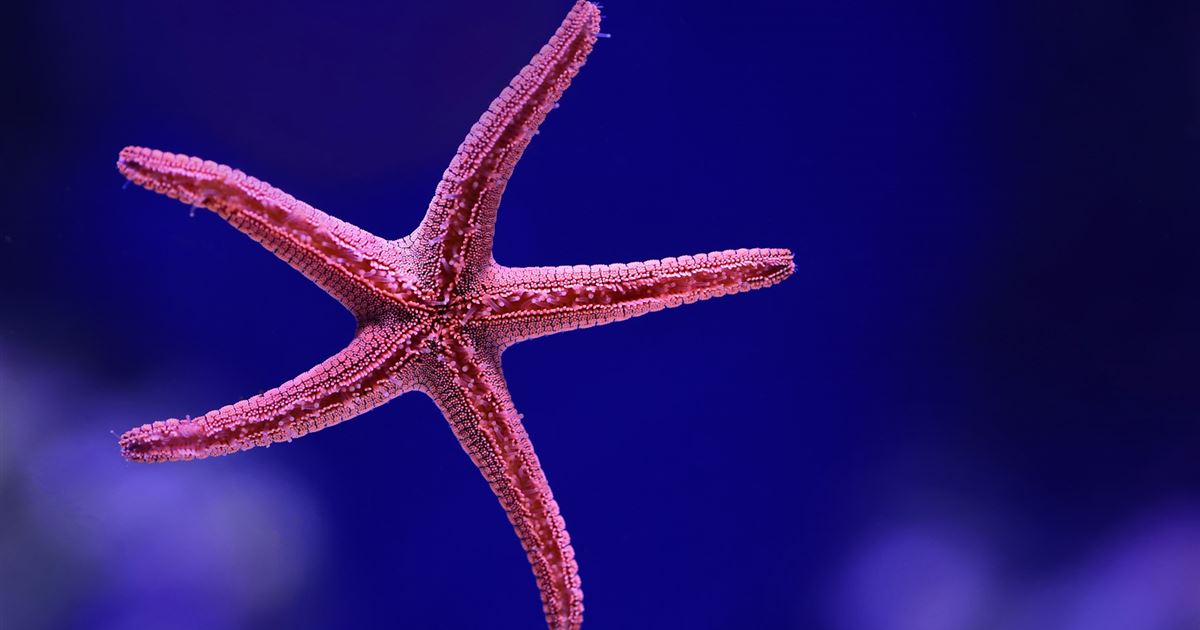
불가사리는 물고기일까? 관족으로 걷고 팔이 다시 자라는 바다 별
별 모양으로 바닥에 붙어 있는 불가사리는 물멍할 때 눈길이 가는 생물이에요. 이름에 물고기(魚)가 들어가지만 물고기가 아닌 이유, 걷고 먹고 팔을 다시 키우는 방법을 공공기관과 박물관 자료로 정리했어요.
불가사리는 물고기가 아니에요
NOAA는 불가사리에게 아가미, 비늘, 지느러미가 없어서 물고기가 아니라고 설명해요. 물에 산다는 점 말고는 닮은 곳이 거의 없어요. 미국자연사박물관도 물고기는 척추가 있는 동물이지만 불가사리는 척추가 없는 무척추동물이라고 소개해요.[1]
불가사리는 성게, 모래달러, 해삼과 같은 극피동물이에요. 몸이 가운데를 중심으로 퍼지는 방사대칭이라서, 팔이 꼭 다섯 개인 것은 아니에요. 팔이 10개, 20개, 40개인 종도 있어요. 요즘 과학자와 수족관 교육자들은 물고기라는 오해를 피하려고 "바다 별(sea star)"이라는 이름을 더 많이 써요.[1]
관족으로 걷고, 팔 끝으로 빛을 느껴요
불가사리는 몸 아래쪽 홈에 줄지어 있는 작은 관족으로 움직여요. NOAA에 따르면 다 자란 해바라기불가사리는 관족 약 15,000개로 1분에 1m를 갈 수 있어요. 관족은 먹이를 붙잡는 데도 쓰이고, 피 대신 바닷물이 수관계라는 관을 따라 흐르면서 영양분을 날라요.[1]
불가사리에게는 앞뒤가 따로 없어서 어느 방향으로든 걸을 수 있어요. 팔 끝에는 빛을 느끼는 눈점이 있는데, 노스캐롤라이나 시 그랜트 자료는 모양을 보지는 못하고 밝음, 어둠, 그림자를 구분하는 정도라고 설명해요.[1]
위를 몸 밖으로 내밀어 먹어요
서호주 정부 자료는 불가사리가 입으로 위를 밀어내어 조개 같은 이매패류와 고둥의 껍데기를 벌리고, 먹이를 몸 밖에서 소화한다고 소개해요. 서호주박물관은 종마다 먹이가 달라서 가라앉은 유기물을 먹는 종도 있지만 대부분은 청소동물이거나 육식이라고 설명해요. 해면, 말미잘, 산호, 고둥, 갑각류, 성게 같은 것을 먹고, 다른 불가사리를 먹는 종도 있어요.[5]
팔이 잘려도 다시 자랄 수 있어요
불가사리는 잃어버린 팔을 다시 키울 수 있어요. 노스캐롤라이나 시 그랜트는 중앙 몸통의 일부가 남아 있으면 팔이 다시 자라고, 원래 크기로 돌아오는 데 약 1년이 걸릴 수 있다고 알려요. 서호주 정부 자료는 종에 따라 잃은 팔에서 새 몸 전체를 만드는 경우도 있고, 몸이 둘로 나뉘어 두 마리가 되는 무성생식도 있다고 소개해요.[3]
모든 종이 같은 방식으로 재생하는 것은 아니고, 시간도 종마다 달라요. 그래서 야외에서 불가사리를 만나면 만지거나 떼어 내지 말고 눈으로만 보는 것이 좋아요.[3]
자주 묻는 질문
불가사리는 물고기인가요?
아니요. 불가사리는 아가미, 비늘, 지느러미가 없는 무척추동물로, 성게나 해삼과 같은 극피동물이에요.
불가사리 팔이 잘리면 다시 자라나요?
중앙 몸통 일부가 남아 있으면 팔이 다시 자랄 수 있고, 원래 크기로 돌아오는 데 약 1년이 걸릴 수 있어요. 종에 따라 달라요.
Is a Starfish a Fish? A Sea Star That Walks on Tube Feet and Regrows Its Arms
A star shape clinging to the glass is a lovely sight during an aquarium break. Despite the "fish" in the name, it is not a fish. Here is why, and how sea stars walk, eat and regrow arms, based on public agencies and museums.
Starfish are not fish
NOAA explains that starfish have no gills, scales or fins, so they are not fish. Apart from living in water, they have little in common. The American Museum of Natural History adds that fish are vertebrates with backbones, while starfish are invertebrates without them.[1]
Sea stars are echinoderms, like sand dollars, sea urchins and sea cucumbers. They have radial symmetry around a center, and not every sea star has five arms: species with 10, 20 or even 40 arms exist. Many scientists and aquarium educators now say "sea star" to avoid the "fish" confusion.[1]
They walk on tube feet and sense light with their arm tips
Sea stars move on small tube feet lined up in grooves on the underside. According to NOAA, an adult sunflower sea star can cover 1 m per minute using about 15,000 tube feet. Tube feet also hold prey, and seawater instead of blood flows through a network called the water vascular system to carry nutrients.[1]
A sea star has no front or back, so it can move in any direction. Each arm tip has an eyespot. NC Sea Grant says sea stars cannot see images, but they can tell light, dark and shadows.[1]
They push their stomachs out to eat
Western Australian government material says sea stars push their stomachs out of their mouths to pry open the shells of bivalves and snails, digesting the prey outside the body. The Western Australian Museum says diets differ by species: some feed on decaying matter, but most are scavengers or carnivores that eat sponges, sea anemones, corals, snails, crustaceans, sea urchins and even other sea stars.[5]
A lost arm can grow back
Sea stars can regrow lost arms. NC Sea Grant says an arm can regrow as long as part of the central disc remains, and it may take about a year to return to full size. Western Australian government material adds that, depending on the species, an arm can even grow into a whole new body, and some species reproduce by splitting in two.[3]
Not every species regenerates the same way, and the time varies. If you meet a sea star outdoors, it is best to look without touching or pulling it off the rock.[3]
FAQ
Is a starfish a fish?
No. A starfish is an invertebrate without gills, scales or fins, and belongs to the echinoderms with sea urchins and sea cucumbers.
Can a starfish regrow a lost arm?
If part of the central disc remains, an arm can regrow, and it may take about a year to reach full size. It depends on the species.
더 둘러보기
- [1] NOAA National Ocean Service, Are starfish really fish?
- [2] Western Australian Museum, Amazing Sea Stars
- [3] NC Sea Grant, You Say Starfish, I Say Sea Star
- [4] American Museum of Natural History, Starfish (Ology card 130)
- [5] Western Australia DPIRD, Fun Fact Sheet: Sea Stars
- [6] 대표 사진: David Clode / Unsplash