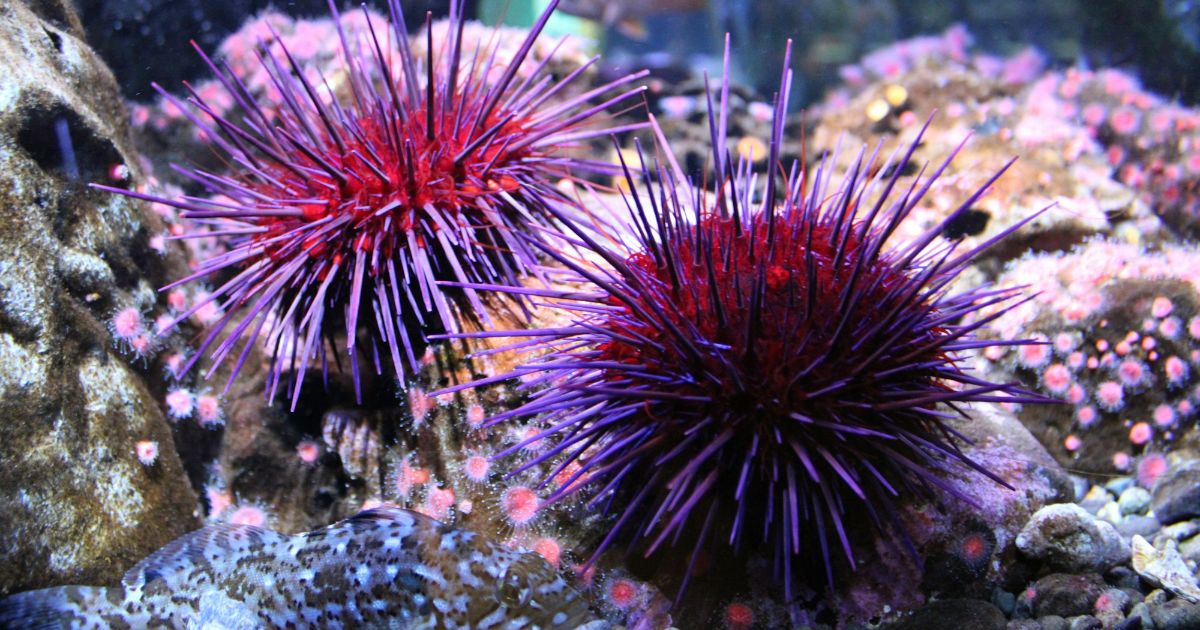
성게는 동물일까? 가시와 관족으로 걷고 다섯 이빨로 먹는 바다 밤송이
밤송이처럼 가시가 돋은 성게는 바닷가 바위틈에서 만나는 친숙한 생물이에요. 어떻게 움직이고 무엇을 먹는지, 가시를 조심해야 하는 이유, 바다 숲과는 어떤 관계인지를 공공기관과 박물관 자료로 정리했어요.
헤엄치지 못하고 관족으로 걸어요
영국 자연사박물관에 따르면 성게는 헤엄치지 못하고 산호나 바위 같은 단단한 바닥을 따라 움직여요. 끝에 빨판이 있는 관족 안팎으로 물의 압력을 바꿔 천천히 이동하고, 가시로 몸을 밀기도 해요. 뇌가 없는 동물이라는 설명도 함께 있어요.[1]
가시는 몸을 감싼 껍데기(골판) 위에 관절처럼 연결되어 어느 방향으로든 움직일 수 있어요(Aquarium of the Pacific).[1]
입은 아래에, 이빨은 다섯 개예요
성게의 입은 몸 아래쪽에 있고, 다섯 개의 이빨이 든 턱 구조를 "아리스토텔레스의 등불"이라고 불러요. 이 이빨로 바위 위의 해조류를 긁어 먹어요. Aquarium of the Pacific는 이 입을 60개의 근육이 움직인다고 소개해요. 배설은 몸 위쪽에 있는 항문으로 해요.[1]
가시와 쏘는 부위는 조심해요
식품 안전 정보 서비스(FSIS)는 성게 가시에 찔리면 피부가 붓고 통증을 느낄 수 있으니 주의하라고 안내해요. 스미소니언 해양 포털은 일부 종은 독이 있다고 설명해요. 긴가시 종류(Diadema)는 찔리면 따끔하고, 꽃성게류는 가시 사이의 집게 모양 기관에 강한 독이 있다고 해요. 바닷가에서 성게를 만나면 맨손으로 만지지 말고 눈으로만 보세요. 찔려서 증상이 심하면 의료진과 상담하세요.[5]
성게와 바다 숲, 갯녹음
성게는 바다 숲에서 자연스러운 존재지만, 너무 많아지면 해조류를 뜯어 먹어 바위를 맨바닥으로 만들 수 있어요. 서울대 해양저서생태학연구실은 동해의 바다사막화(갯녹음)가 주로 성게 과다 번식으로 해조류가 줄어서 생긴다고 설명해요. 한국수산자원공단 자료도 성게가 갯녹음 해역에 높은 밀도로 분포하며 바닷말의 생장을 막아 갯녹음이 이어지는 주원인이 된다고 정리했어요.[6]
미국 NOAA는 캘리포니아에서 성게를 잡아먹는 불가사리가 줄고 바다가 따뜻해져 성게가 폭증한 사례를 소개해요. 성게는 먹이가 없어도 활동을 낮추고 오래 버틸 수 있어서, 한번 성게 밭이 되면 숲이 돌아오기 어렵다고 해요.[6]
자주 묻는 질문
성게는 식물인가요, 동물인가요?
동물이에요. 척추가 없는 무척추동물이고, 불가사리와 같은 극피동물이에요.
성게알은 어느 부분인가요?
FSIS 자료에 따르면 보통 먹는 부분은 성게알이라 부르는 황색의 생식선이에요.
Is a Sea Urchin an Animal? The Spiny "Chestnut" That Walks on Tube Feet and Chews With Five Teeth
With spines like a chestnut burr, sea urchins are a familiar sight in rock crevices along the shore. Here is how they move and eat, why to watch the spines, and how they relate to kelp forests, based on public agencies and museums.
They cannot swim and walk on tube feet
According to the Natural History Museum in London, sea urchins cannot swim and move along hard surfaces such as coral and rock. They change the water pressure in and out of tube feet that have suckers at the tips to move slowly, and they can also push themselves along with their spines. The museum also notes they have no brain.[1]
The spines sit on ball-and-socket joints on the shell (test), so they can point in any direction (Aquarium of the Pacific).[1]
The mouth is underneath, with five teeth
A sea urchin's mouth is on its underside, and the jaw structure holding five teeth is called "Aristotle's lantern." It scrapes algae off rocks. Aquarium of the Pacific says 60 muscles move this mouth. Waste leaves through an anus on the top of the body.[1]
Watch the spines and stinging parts
Korea's Fishery Product Safety Information Service (FSIS) warns that a sea urchin spine puncture can cause swelling and pain. The Smithsonian Ocean portal says some species are venomous: long-spined Diadema give a noticeable sting, and flower urchins have strongly toxic pincer-like organs among their spines. If you meet one on the shore, look but do not touch with bare hands, and see a medical professional if symptoms are severe.[5]
Sea urchins and kelp forests
Sea urchins are a natural part of kelp forests, but too many can graze algae away and leave bare rock. Seoul National University's benthic ecology lab explains that the "sea desertification" (Korean "gaetnogeum") in the East Sea is mainly caused by urchin overgrowth reducing seaweed. A Korea Fisheries Resources Agency document likewise says urchins live at high density in barren areas and are a main reason barrens persist by blocking seaweed growth.[6]
NOAA describes how in California a drop in urchin-eating sea stars and warm seas let urchin numbers explode. Urchins can slow down and survive long without food, so once a barren forms the forest struggles to return.[6]
FAQ
Is a sea urchin a plant or an animal?
An animal. It is an invertebrate without a backbone and an echinoderm like the starfish.
Which part of the sea urchin is the roe?
According to FSIS, the part usually eaten, called sea urchin roe, is the yellow gonad.
더 둘러보기
- [1] Natural History Museum, Sea urchins: Strange and spiny wonders of the ocean
- [2] Aquarium of the Pacific, Red Sea Urchin
- [3] 수산물안전정보서비스(FSIS), 바다의 호르몬 성게
- [4] 서울대학교 해양저서생태학연구실, 성게(Our Benthos)
- [5] Smithsonian Ocean, Echinoderms: Sea Stars, Urchins, Sand Dollars, and Relatives
- [6] NOAA Sanctuaries (2026), Restoring Balance: What Sea Urchins Reveal About Ecosystem Health
- [7] 한국수산자원공단(FIRA), 갯녹음 원인과 대책
- [8] 대표 사진: Bryan White / Unsplash