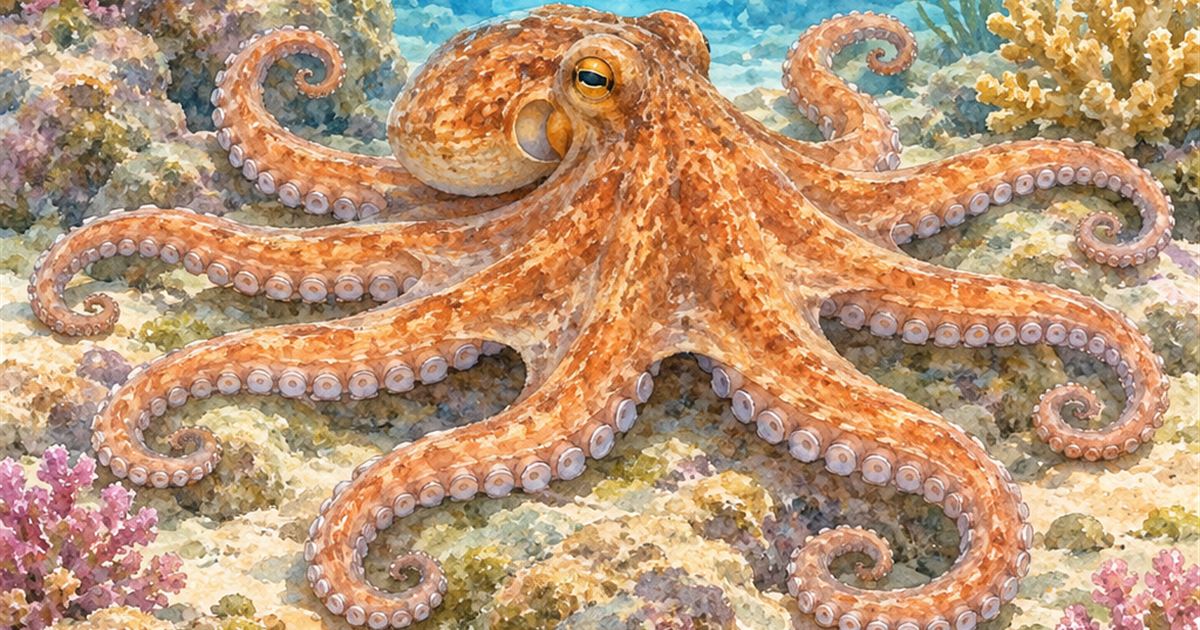
문어 심장이 3개인 이유: 파란 피와 팔 8개의 비밀
물멍하다 보면 한참 눈길이 가는 문어. 심장이 3개이고 피가 파란색이라는 이야기는 유명하지만, 왜 그런지까지 알면 더 재미있어요. 박물관과 수족관 자료로 정리했어요.
심장이 3개, 피는 파란색
문어의 심장은 3개예요. 2개는 아가미로 피를 보내고, 나머지 1개가 산소를 얻은 피를 온몸에 돌려요. 사람의 심장 하나가 하는 일을 3개가 나눠서 하는 셈이에요.[1]
피가 파란 이유는 산소를 나르는 단백질이 달라서예요. 사람은 철이 든 헤모글로빈을 쓰지만 문어는 구리가 든 헤모시아닌을 써서 피가 파랗게 보여요. 구리 기반 단백질은 수온과 산소가 낮은 환경에서 산소를 나르는 데 효율적이라고 해요.[1]
다리가 아니라 팔이에요
문어의 8개는 다리가 아니라 팔이에요. 영어로도 tentacle이 아니라 arm이라고 불러요. 팔을 따라 빨판이 줄지어 있고, 촉수는 끝에만 빨판이 있는 점이 달라요.[3]
빨판은 물건을 붙잡을 뿐 아니라 맛과 냄새도 느껴요. 거대문어 암컷은 빨판이 2,240개쯤 된다고 해요.[3]
뉴런의 3분의 2는 팔에 있어요
내셔널 아쿠아리움은 문어 뉴런의 3분의 2가 팔에 있다고 설명해요. 그래서 팔이 중앙 뇌의 도움 없이도 어느 정도 움직일 수 있어요. 자연사박물관은 이런 구조 덕분에 팔로 하는 일을 더 빠르고 효과적으로 해낸다고 소개해요.[2]
오래 살지 못하는 동물이에요
몬터레이베이 수족관에 따르면 거대문어는 문어 중에서는 오래 사는 편인데도 약 3~5년이에요. 문어는 보통 1년 넘게 살지 못한다고 해요. 거대문어는 평생 혼자 살다가 마지막에 짝을 찾아 번식하고 얼마 뒤 죽어요.[3]
몸을 숨기는 재주
문어는 뼈가 없어서 좁은 틈도 지나갈 수 있어요. 알래스카 어류수렵부는 50파운드짜리 문어가 5cm 틈으로 빠져나갈 수 있다고 소개해요. 피부의 색소세포로 색과 질감을 바꿔서 바위나 모래 사이로 사라지기도 해요.[6]
자주 묻는 질문
문어 심장은 정말 3개인가요?
네. 2개는 아가미로 피를 보내고 1개는 온몸으로 피를 보내요.
문어 피는 왜 파란색인가요?
산소를 나르는 단백질이 철 대신 구리가 든 헤모시아닌이라서 파랗게 보여요.
Why an Octopus Has Three Hearts: Blue Blood and the Secret of Eight Arms
Octopuses can hold your gaze for a long time. Their three hearts and blue blood are well known, but it is even more fun to know why. Here is what museums and aquariums say.
Three hearts and blue blood
An octopus has three hearts. Two pump blood through the gills, and the third sends the oxygen-rich blood around the body. In a way, three hearts share the job that one heart does in a human.[1]
The blood is blue because a different protein carries oxygen. Humans use iron-based hemoglobin, but octopuses use copper-based hemocyanin, which makes the blood look blue. Copper-based proteins are said to carry oxygen efficiently in cold, low-oxygen water.[1]
They are arms, not legs
The eight limbs of an octopus are arms, not legs. In English they are called arms, not tentacles. Arms have suckers along their length, while tentacles have suckers only at the tip.[3]
The suckers do not just grip things; they also taste and smell. A female giant Pacific octopus has about 2,240 suckers.[3]
Two-thirds of the neurons are in the arms
The National Aquarium explains that two-thirds of an octopus's neurons are in its arms, so the arms can move to some degree without help from the central brain. The Natural History Museum notes that this setup lets an octopus do tasks with its arms more quickly and effectively.[2]
A short-lived animal
According to Monterey Bay Aquarium, the giant Pacific octopus lives only about 3-5 years, even though that is long for an octopus. Most octopuses do not live more than a year. Giant Pacific octopuses live alone, find a mate at the end of life, breed and die soon after.[3]
Masters of hiding
With no bones, an octopus can squeeze through narrow gaps. The Alaska Department of Fish and Game notes that a 50-pound octopus can escape through a 5 cm opening. Pigment cells in the skin change color and texture, letting it vanish among rocks and sand.[6]
FAQ
Does an octopus really have three hearts?
Yes. Two pump blood through the gills and one pumps it around the body.
Why is octopus blood blue?
Because the protein that carries oxygen is copper-based hemocyanin instead of iron-based hemoglobin, so it looks blue.
더 둘러보기
- [1] Smithsonian Ocean, Cephalopods: Octopus, Squid, Cuttlefish, and Nautilus
- [2] National Aquarium, An Ode to the Octopus
- [3] Monterey Bay Aquarium, Giant Pacific octopus
- [4] NOAA National Ocean Service, Heartless or hopelessly romantic?
- [5] Natural History Museum, Octopuses keep surprising us
- [6] Alaska Department of Fish and Game, Giant Pacific Octopus
- 대표 그림은 AI로 생성했어요.